Statement: Targeted Attacks on Immigrant Communities

Arts for LA stands in strong opposition to the recent ICE raids and the federal government’s targeted attacks on our immigrant neighbors in Los Angeles. These actions violate our city’s sanctuary status and, more importantly, the fundamental rights and dignity of our communities. Immigrants are not only vital to the social and economic fabric of our city, county, and state—they are central to our arts and culture ecosystem. 

As Arts for LA’s 2021 Laura Zucker Fellow Erika Hirugami powerfully stated, “undoc+ artists and cultural workers remain largely invisible in our institutions, despite their profound contributions.” Now is the time to stand in unwavering solidarity with our immigrant neighbors, passionate protestors, and all who call LA home. 

We applaud cities that are reaffirming their sanctuary commitments, including Downey, Glendale, and Culver City. We urge the rest of LA County to follow their lead. 

We know these attacks have impacted our creative communities both directly and indirectly, as well as personally and professionally. As part of our mission to advocate for an equitable, healthy, and vibrant Los Angeles, we will be sharing resources and working with Erika to highlight how we can act with clarity, courage, and care. In the meantime, follow The Coalition for Humane Immigrant Rights (CHIRLA) and the ACLU to better understand your rights and how to support those most at risk.

April 2025: A Month of Action, Advocacy, and Resilience

Dear Arts Advocates,

We are living through an extraordinarily difficult moment for arts and culture in this country. On May 2, 2025, the Trump administration proposed completely eliminating funding for the National Endowment for the Arts (NEA), National Endowment for the Humanities (NEH), Institute of Museum and Library Services (IMLS), PBS, and NPR in the 2026 federal budget. Just hours later, hundreds of arts organizations across the U.S. (including many in Los Angeles) received abrupt notices from the NEA terminating their grants. 

These top-down decisions have had devastating ripple effects on local organizations like Armory Center for the Arts Clockshop, and Angel City Chorale – which have collectively lost hundreds of thousands of dollars in committed funding. We see you, we stand with you, and we urge you to share your experiences and seek support. If you’re facing grant cancellations or disruptions, we encourage you to report it HERE and appeal the decision. You can also monitor ongoing federal executive orders impacting nonprofits HERE.

Despite this harmful and infuriating situation, we know that the arts community has repeatedly proven itself to be one of the most resilient, united, and innovative groups of people in the world. We have been embracing that collective spirit over the last few months – having traveled to Washington, D.C. with key partners to meet with Senators and members of Congress, underscoring the urgent need to resist these harmful policies and uplift the creative workers who have long served their communities through education, expression, and cultural connection.

That spirit is alive in California and Los Angeles, too, where hundreds of advocates have stayed engaged to protect our cultural assets and emphasize that the time to lead at the regional level is now. Here’s a week-by-week look at what we accomplished together this Arts Month.

\Week 1: Laying the Foundation

Unveiling the 2025–27 Policy & Advocacy Agenda

Arts for LA proudly launched a new agenda, Roots, Recovery, and Regeneration, addressing the many challenges facing LA’s creative economy—historic underfunding, pandemic impacts, and recent wildfires. This agenda, developed in collaboration with our arts community, aims to deepen connections across the sector, share knowledge to strengthen capacity and preparedness, and drive grassroots and grasstops organizing for equitable recovery and growth.

Engaging Emerging Artists

Arts for LA participated in Center Theatre Group’s “Going Pro” Career Fair, supporting over 200 students and early-career professionals transitioning into the theatre and live entertainment industry. Additionally, we partnered with the City of Santa Monica Cultural Affairs to kick off Arts, Culture, and Creativity Month, celebrating the vibrancy of our local arts scene and offering a narrative building workshop.

Week 2: Amplifying Voices at City Hall

Arts Advocacy Day at LA City Hall

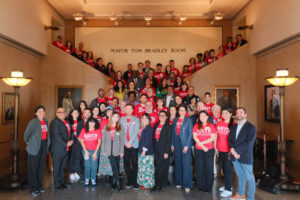
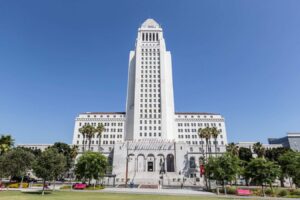
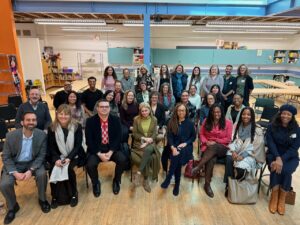
On April 10, Arts for LA convened over 100 artists, administrators, and community members at LA City Hall to engage with local elected officials on critical issues:

  • Sustained and increased arts funding for accessible programming.
  • Streamlining contracts and payments for arts organizations and independent contractors.
  • Implementing freelance worker protections to support LA’s creative workforce.

For many creatives, this was their first time meeting with an elected official. We are continuing to build a deep network of arts advocates who can drive change in their communities.

Creative Worker Series

We documented personal stories from freelance and gig workers in the creative economy. These stories emphasized the impact of creative work and what a sustainable living wage would mean for the field. 

Week 3: Addressing Budget Challenges

City Budget Concerns

Facing a nearly $1 billion deficit, the Mayor’s proposed FY25–26 budget includes potential layoffs of approximately 1,600 city employees, with 14 positions from the Department of Cultural Affairs at risk. Proposed cuts also threaten grants, cultural programming, and administrative positions, potentially leading to a loss of 55 grantees and over 355 creative jobs. Read more here.

Want to take action to oppose these cuts? Send a letter!

County Budget Reductions

Los Angeles County’s $47.9 billion Recommended Budget for FY 2025–26 reflects a $1.3 billion decrease from the previous year. The proposal includes an 11% reduction (approximately $609,000) to the Organizational Grant Program, which could have devastating effects on arts and culture organizations. Read more here.

Send a letter to the Board of Supervisors and ask them to oppose these cuts. 

Week 4: Statewide Advocacy

Arts Advocacy Day in Sacramento

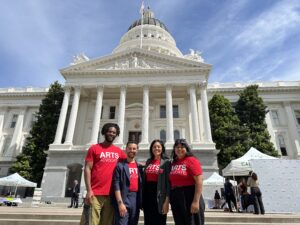
Arts for LA traveled to California’s Capitol to take part in CA for the Arts’ third-annual summit “Health, Healing, and Hope” to connect with peers from across the state and meet with legislators to advocate for key issues impacting our creative communities. Our advocacy focused on restoring $5 million to the California Arts Council, ensuring equitable implementation of Prop 28, supporting a $750 million film tax incentive to keep jobs and productions in L.A., and advancing protections for freelance workers.

We spoke with folks like Dr. Maria Rosario Jackson (Former Chair, NEA), Lauren Pizer Mains (Arts Consultant to Sen. Ben Allen), Senator Maria Elena Durazo, and Assemblymember Nick Schultz.

Entertainment Equity Alliance Career Expo

Arts for LA tabled at the second annual Careers in Entertainment Expo, organized by the Entertainment Equity Alliance – a one-day interactive event that brought together 2,500 students and early career professionals to explore opportunities available in the entertainment industry.

Prop 28 Accountability

In response to mounting concerns over the misuse of Proposition 28 funds, Assemblymember Isaac Bryan formally requested a state audit of LAUSD. This follows a recently filed lawsuit alleging that LAUSD diverted funds meant to expand arts education in violation of the law’s intent.

Arts for LA has partnered with Create CA to launch a grassroots letter campaign in support of Assemblymember Bryan’s audit request. In just one week, over 1,800 letters have been sent to elected officials urging oversight, and a video summarizing the lawsuit and concerns around LAUSD has already surpassed 7,000 views, underscoring widespread public interest in accountability.

Help us spread the word – send a letter to support an audit. 

Week 5: Embracing Innovation and Collaboration

LA County Arts Datathon: Intelligence

Arts for LA joined LA County’s Arts Datathon to support hands-on workshops designed to help our arts and culture communities understand how to use generative AI tools effectively and ethically.

2025 Digital Equity Advocacy Day

Arts for LA traveled back to Sacramento to join 100 advocates from across California for the 2025 Digital Equity Advocacy Day. We attended committee hearings and led legislative office meetings to stand up for equitable access to affordable broadband. This is a part of Arts for LA’s commitment to working across sectors and issue areas on the topics that impact our historically under-resourced students, educators and arts organizations.

Dance and Dialogue: Celebrate LA

Our staff celebrated the culmination of Arts Month by partnering with Dance and Dialogue to “Celebrate LA” through an evening of dance. High school students from across the region showcased their diverse talents and were joined by the Los Angeles Jazz Company to provide much needed joy to over 1,000 attendees – including Glorya Kaufman, Derek Hough, and many others. 

LA28 Cultural Olympiad

After 8 months of community engagement, data collection, and analysis, led by the LA County Department of Arts and Culture in partnership with Arts for LA, LA Commons, and Community Arts Resources – we are proud to share a comprehensive report detailing aspirations, concerns, and strategies from the field to build a lasting cultural legacy leading up to and during the 2028 Olympic and Paralympic Games. 

Looking Ahead

As we reflect on a month of significant achievements and ongoing challenges, we remain committed to advocating for the arts and supporting our creative communities. We invite you to stay engaged and informed:

Together, we can continue to champion the arts and ensure a vibrant, equitable future for all.

In solidarity,

Arts for LA

Statement: Recent Federal Changes and NEA Guidelines

Dear Arts Advocates,

Arts for LA is disheartened by the National Endowment for the Arts’ newly announced guidelines for the Grants for Arts Projects (GAP) program, which risks exacerbating inequities, silencing vital artistic voices, and dismantling years of progress toward cultural equity and inclusion in the arts and culture sector. While these changes raise serious concerns about the future of equitable arts funding, we believe it’s crucial to provide our community with hope, action, and an appeal for solidarity moving forward.

It’s important to recognize that NEA staff are navigating complex challenges. Federal agencies are being dismantled, executive orders are flooding the government apparatus, and the demand for nonprofit support has never been greater. NEA staff must balance their role as federal employees responding to administrative directives with their role as public servants to a multicultural sector in crisis. 

We also understand artists and creative workers are feeling a deep sense of betrayal under this new federal administration. Targeted attacks on diversity and inclusion initiatives are increasing fears that organizational missions are at stake. These actions threaten the work we’ve done to build arts accessibility for all, foster community cohesion and empowerment, and position creativity as economic development. 

In the foreword of its Building Bridges report, the NEA itself has emphasized the arts’ role in “promoting civic engagement, inclusivity, social cohesion and cross-cultural understanding,” and has affirmed that “cultural organizations and practitioners contribute to the health and well-being of individuals and communities, invigorate physical spaces, fuel democracy and foster equitable outcomes.” Despite new restrictions, it’s important to remember that the adjusted grant guidelines dictate project proposals and not an organization’s mission or values

Let us be clear, Arts for LA is grounded in our mission to lead communities, artists, and organizations to advocate for an equitable, healthy, and vibrant Los Angeles region through the arts. Our values necessitate diversity, equity and inclusion and we understand that many nonprofit organizations, particularly those serving historically underserved communities, rely on public funding to sustain their vital work. That is why we believe our sector must remain actively involved in holding public servants accountable rather than withdrawing from engagement. 

As we navigate this challenging moment, we encourage you to:

  1. Review the recent NEA Webinar for further guidance on grant guidelines (slides here)
  2. Attend Americans for the Arts’ Office Hours with NEA’s Senior Advisor, Mary Anne Carter on Friday, February 21 at 1PM PST
  3. Join Arts for LA and CA for the Arts for an open discussion on federal changes as we prepare for a DC trip to meet members of Congress and NEA staff
  4. Continue applying for NEA funding while maintaining your organization’s core values in the face of unprecedented pressure tactics
  5. Consult legal counsel before submitting grant applications if you have specific concerns

We urge the NEA to define newly restrictive terms as they relate to arts programming, offer more detailed implementation guidance, and maintain open dialogue with the field. 

In the face of wildfires, federal upheavals, and a funding crisis, it’s natural to feel overwhelmed—but staying informed, lifting each other up, and standing in unshakable solidarity has always been our north star. 

Arts for LA remains committed to monitoring government actions impacting the arts and culture sector and ensuring our community is informed and prepared to respond to policy changes that threaten equity and sustainability. We will continue to advocate at the local level for increased funding to counteract federal and state cuts, strengthen pathways to sustainable creative careers, and uphold the values of diversity, equity, inclusion, and access for all. We’re in this together.

Always,

Arts for LA

Reframing Creative Economy Advocacy

Dear Arts Advocates,

I recently had the opportunity to speak on a Creative Economy panel hosted by the Federal Reserve Bank of New York and Creatives Rebuild New York (CRNY). 

The program focused on how the creative community and its workforce can drive a healthy economy across New York State and the nation. It was an inspiring day filled with the thought leadership of visionaries like David Erickson from the Federal Reserve Bank of New York, Dr. Maria Rosario Jackson, former Chair of the National Endowment for the Arts, and Sarah Calderon, Executive Director of CRNY. The event was a clear reminder on why centering the artist and the creative worker is so important when talking about the creative economy.

As I reflect on the event and the profound words of the artists and community leaders, below are a few post event reflections to share.

CURRENT CREATIVE ECONOMY ADVOCACY HOPES FOR A TRICKLE DOWN EFFECT

The dominant strategy for creative economy (CE) advocates is fundamentally trickle down economics. We advocate to fund institutions by highlighting our industry’s outsized economic impact to the overall economy. We assume that those resources will trickle down to benefit the people (artists, culture bearers and creative workers). It generally does not. Creative worker protests prevail across the nation i.e. LA MOCA, Seattle Art Museum, Mass MOCA, Victoria Gardens Theater in Chicago, Guggenheim, and the 2023 writer’s strike are recent proof. The advocacy strategy is not benefitting the people because it’s not aiming to do that. 

This trickle down strategy, paired with incomplete data on our field and its workforce, is hurting systemic change efforts.

DATA BLIND SPOTS

Current CE data has big blind spots that limit our view of the field. In California, our data reports do a good job of measuring the number of jobs, institutions, and wages, but the data does not disaggregate to clearly understand the nonprofit sector experience. Aggregating entertainment industry and nonprofit sector wage data grossly skews the wage data reporting for the nonprofit sector. For example, the Creative Economy Dashboard on the OTIS College of Art and Design website reports that the average annual wage for a job in Los Angeles is $153,501. Furthermore, the wages of the independent contractor and gig worker (which represents approximately 50% of our creative workforce) is not captured in the current data sets. Leading researchers like CVL Economics are working to fill these data gaps, and there is still a need for a national survey on how artists piece together sustainable livelihoods.

A DOUBLE-EDGED SWORD

As CE advocates, we strive to make the strongest case to elected officials and private philanthropy that they should invest in the creative economy. We often cite data points that illustrate how these jobs are high-demand, high-paying jobs. This is a more compelling case than arguing that creative economy jobs are high-demand, low-paying jobs. The problem is that both of these statements are true. And as advocates, we often utilize the aggregated data because that is what is currently available to us.

Many creative economy workers start their careers at local arts and culture nonprofits, who often struggle with paying their workers living wages because they are challenged to fund their organization.

In response, advocates tend to focus their advocacy efforts on capitalizing the institutions. This trickle down economics advocacy strategy is a double-edged sword; it both helps and hurts us, and it’s time for CE advocates to reframe our advocacy strategy.

BOLD STRATEGIES CENTER THE CREATIVE WORKFORCE

We need bold strategies that center the workforce, focusing on expanding economic opportunity (i.e. living wages, benefits and safety nets) for artists and creative workers. Doing so will directly address the financial sustainability people need, while broadening the advocacy base from executive directors and government relations professionals to creative workers writ large. Reframing our advocacy will not preclude us from funding opportunities for institutions, and the new framing will better align with today’s political and economic climate.

One thing is foreseeable at this time of head-spinning change in our country — we need to both broaden our advocacy base and get louder to ensure both our artists and creative workers have economic mobility, and institutions have sufficient public and private funding to continue to contribute to U.S. economic growth and global competitiveness.

THE FUTURE OF CREATIVE ECONOMY / JOBS

Local initiatives like Arts for LA’s Creative Jobs Collective (CJC) — a cross-sector initiative begun in 2021 to pathway 10,000 people into the creative economy by the year 2030 — leads with the vision of centering the creative worker in cross-sectoral policy development. The policy platform for the initiative promotes economic growth and regional competitiveness. 

Similarly, the California Arts Council’s Creative Economy Workgroup (of which Arts for LA is a member) is developing a strategic plan for the Creative Economy of California. Key action areas (see page 29), include: improving, securing and stabilizing the infrastructure for creative economy workers, financial incentives for creative businesses and individuals to grow, clear pathways from education to jobs, and creative financing to arts funding among other actions. Californians for the Arts (our state advocacy organization) continues to center the creative workforce in all of their advocacy, including in their “Art Work is Real Work” campaign. 

As we look to the future, Arts for LA is proud to be in national conversations with the National Arts Policy Alliance which aims to organize and mobilize creative workers in partnership with other justice movements to win economic security for all.

The future of Creative Economy Advocacy centers the artist and creative worker, and in doing so we will build a healthier local and national economy.

#CreativeJobsCollective #CreativeFutures #ArtWorkisRealWork

Onward,

Gustavo Herrera, CEO of Arts for LA

Wildfire Resources Available to You

UPDATE as of January 24, 2025: Please visit our Wildfire Relief page for access to a continuously-updated spreadsheet of resources for artists and creative workers impacted by the fire, as well as a form for organizations to submit the aid and resources they are able to provide.

Dear Arts for LA Community Members,

We hope you and your loved ones are safe.

There have been 180,000 evacuations (and growing) across LA County over the last 48 hours due to the wildfires. Entire neighborhoods in the Pacific Palisades, Altadena, Pasadena, Sepulveda Basin, Sylmar and the Hollywood Hills are gone. All schools in the LA Unified School District are closed. Businesses and cultural institutions have been entirely destroyed by the ongoing fires. This is the most destructive fire in LA history. 

Los Angeles, our hearts are with you, especially those who lost loved ones, lost homes or were displaced during this crisis. We also recognize all of the first responders who are at this very moment fighting these fires, and helping people to safety no matter how dangerous it might be. This is one of those moments where we must come together as one community to take care of one another with small and big actions alike. 

Below are resources that we hope will help you or can be forwarded to help your loved ones:

  • If you have been displaced and are seeking temporary housing, you can go here
  • Emergency Relief Grants for craft artists available via CERF+ here
  • You can register for LA County Emergency Alerts here
  • For a trusted and locally based guide to LA Services, you can go here
  • LA Unified School District Updates and meal distribution for LAUSD Students here
  • A list of entertainment industry resources from Entertainment Community Fund here
  • For resources pertaining to evacuation, housing, food, air quality, clean up, mental health, legal aid, and other issues, go here.
  • Mutual Aid LA’s List for a region-wide list of resources here
  • You can find donation drop-off locations across LA to support families here 
  • If you are able to, make a financial contribution to Wildfire Relief efforts here
  • If you are able to, support local American Red Cross Disaster Relief efforts here

To local artists and leaders of our local cultural institutions: if you have been impacted, please contact us so that we will know the impact this crisis is having on our local arts ecosystem and so that Arts for LA can be a connector to others that can help.

We recognize that recovery from natural disasters can take years. Let us come together now and strengthen one another in this time of great need. 

In Solidarity,

Arts for LA Board and Staff